
Unitarian Universalism
About Unitarian Universalism
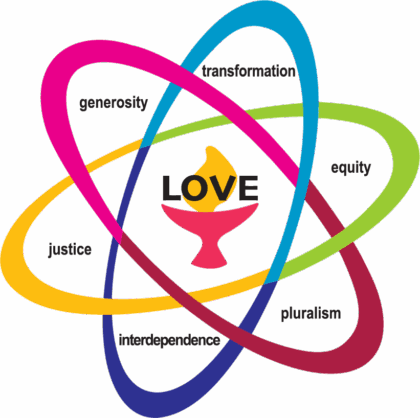 (For further information, see the UUA Website.)
Unitarian Universalism (UU) is a liberal religion characterized by its commitment to theological diversity, social justice, and individual spiritual growth. It is a non-creedal faith, meaning it doesn’t have a set of required beliefs or doctrines. Instead, UU congregations are united by shared principles and values that emphasize reason, compassion, and the inherent worth of every person.
Here’s are some of the key points that distinguish Unitarian Universalism:
- Roots in Two Traditions: UU emerged from the consolidation of two historic Protestant denominations: Unitarianism and Universalism.
- Inclusivity and Diversity: UU welcomes people of all beliefs and backgrounds, including those who identify with other religions, those who are agnostic or atheist, and those who are spiritual but not religious.
- Focus on Shared Principles: While not bound by a creed, UU congregations adhere to seven principles that emphasize human dignity, justice, compassion, and the search for truth.
- Individual Freedom of Belief: Unitarian Universalists are encouraged to explore their own beliefs and spirituality, drawing from various sources of wisdom and personal experience.
- Social Justice Focus: UU congregations are actively involved in social justice work, advocating for human rights, equality, and environmental protection.
- Emphasis on Community: UU provides a supportive community for individuals on their spiritual journeys, fostering connection and shared values.

- Distinctive UU Symbol: The flaming chalice is a widely recognized symbol of Unitarian Universalism.
In essence, Unitarian Universalism offers a framework for religious exploration and ethical action, encouraging individuals to find their own path while working toward a more just and compassionate world.